Collective Practice: Mugwort in the City
Mugwort does not grow in isolation. In New York, it is everywhere — a plant of edges and afterthoughts, growing where other things have been cleared or paved or left behind. I became interested in mapping these sites not as a botanical survey but as an invitation: what does it mean to gather around this particular plant, in these particular places, and ask what it knows?
Collective Practice: Mugwort in the City
Qingming Forage Walk, Conference House Park, Staten Island
On Qingming Festival — the traditional Chinese day for honoring ancestors, when mugwort is customarily gathered to make qingtuan, the green rice cakes eaten at graveside — a small group of us went to Staten Island and walked to Conference House Park, one of the city's oldest natural areas and a site layered with histories: Indigenous, colonial, revolutionary. Zoe Yang, Dani Mercury, and I walked together through the park's margins, looking for mugwort, finding it in abundance where the path gave way to bramble.
We talked about ancestors — ours, each other's — and about how mugwort carries that dual function across multiple cultures: a medicinal plant, a ritual plant, a plant that marks transitions between the living and the dead. We talked about the history of the plant's arrival in North America, carried in ballast, in the soil around ship hulls, in the root systems of plants deliberately imported for private gardens. We talked about what it means that a plant associated with ancestral memory in China is classified as a weed to be eradicated here. We did not resolve any of these questions. But we made a kind of kinship by asking them together, beside the plant, on a day set aside for remembering what has been lost and what persists.
Collective Phytogram Workshop, Naval Cemetery Landscape, Brooklyn
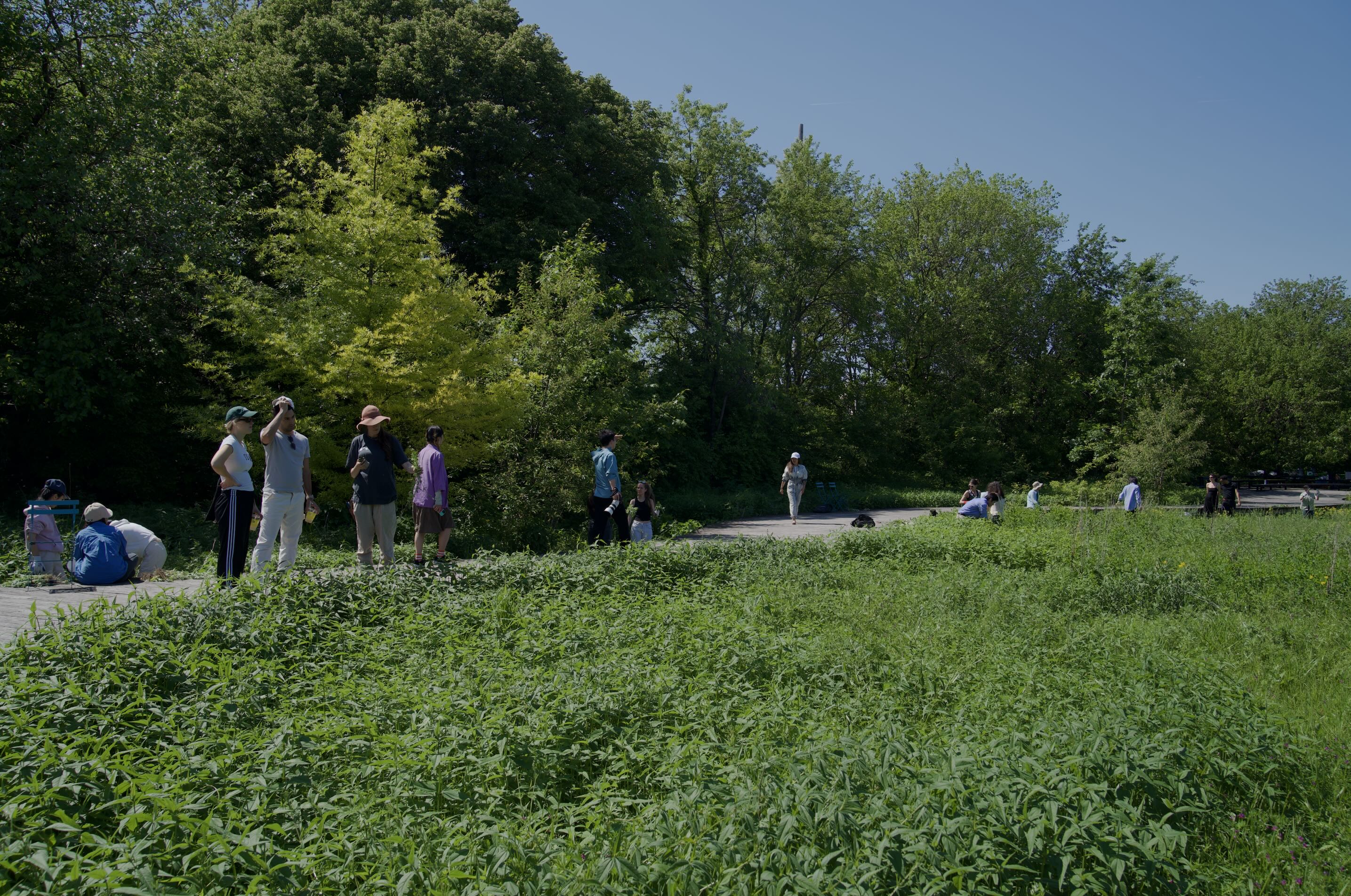
At Naval Cemetery Landscape — itself a site of history held under tension, a former military burial ground now managed as an ecological sanctuary — we gathered nearly twenty people for a collective phytogram workshop in collaboration with Shenghan and the site's Head of Horticulture, Avvah. We began by weeding mugwort together: learning to identify the plant, to remove it properly, to understand the site's ecological logic. The discussion that followed — about the complexity of the "invasive" designation, about the colonial legacies that brought these plants here — happened with dirt on our hands.
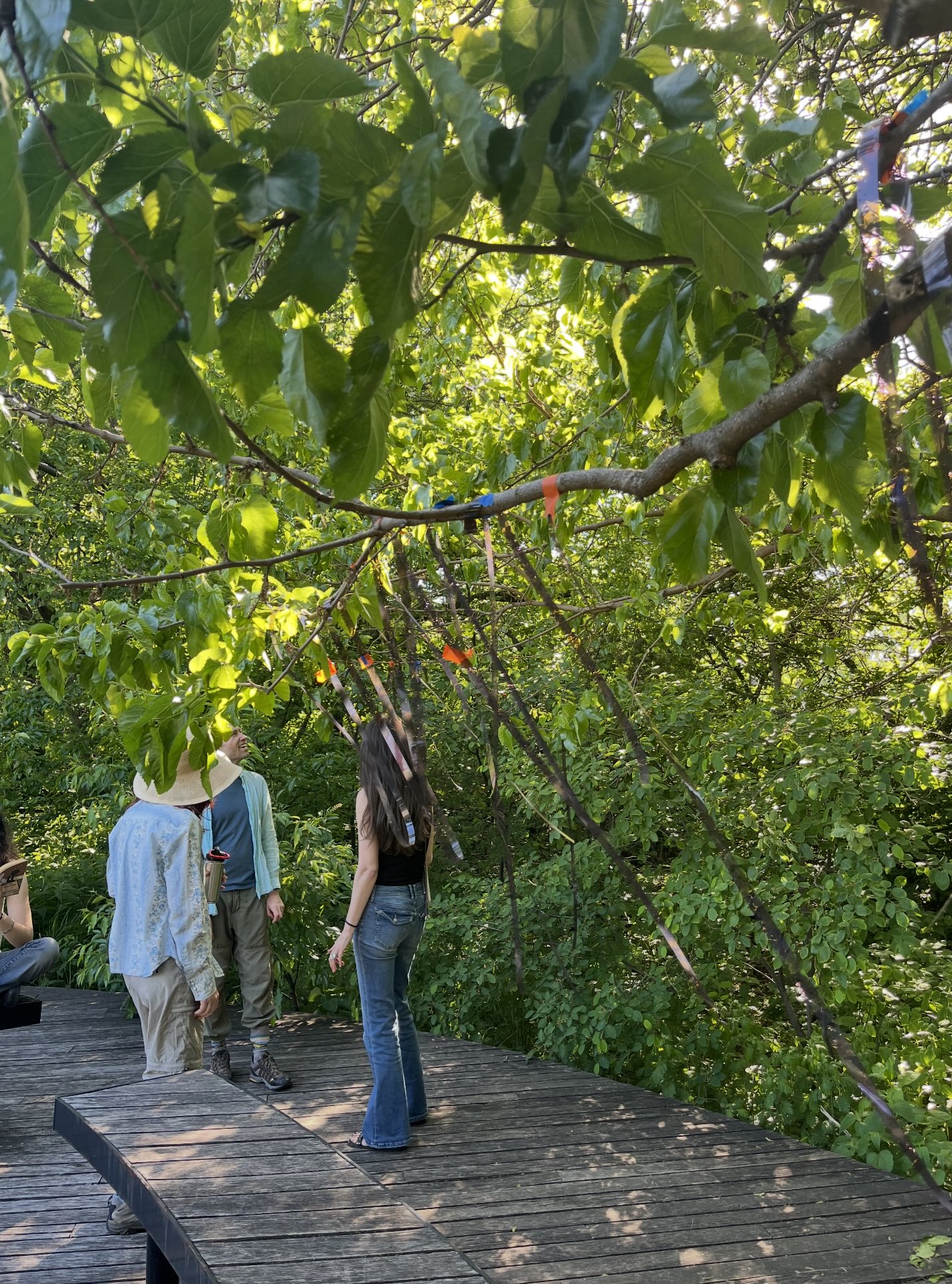
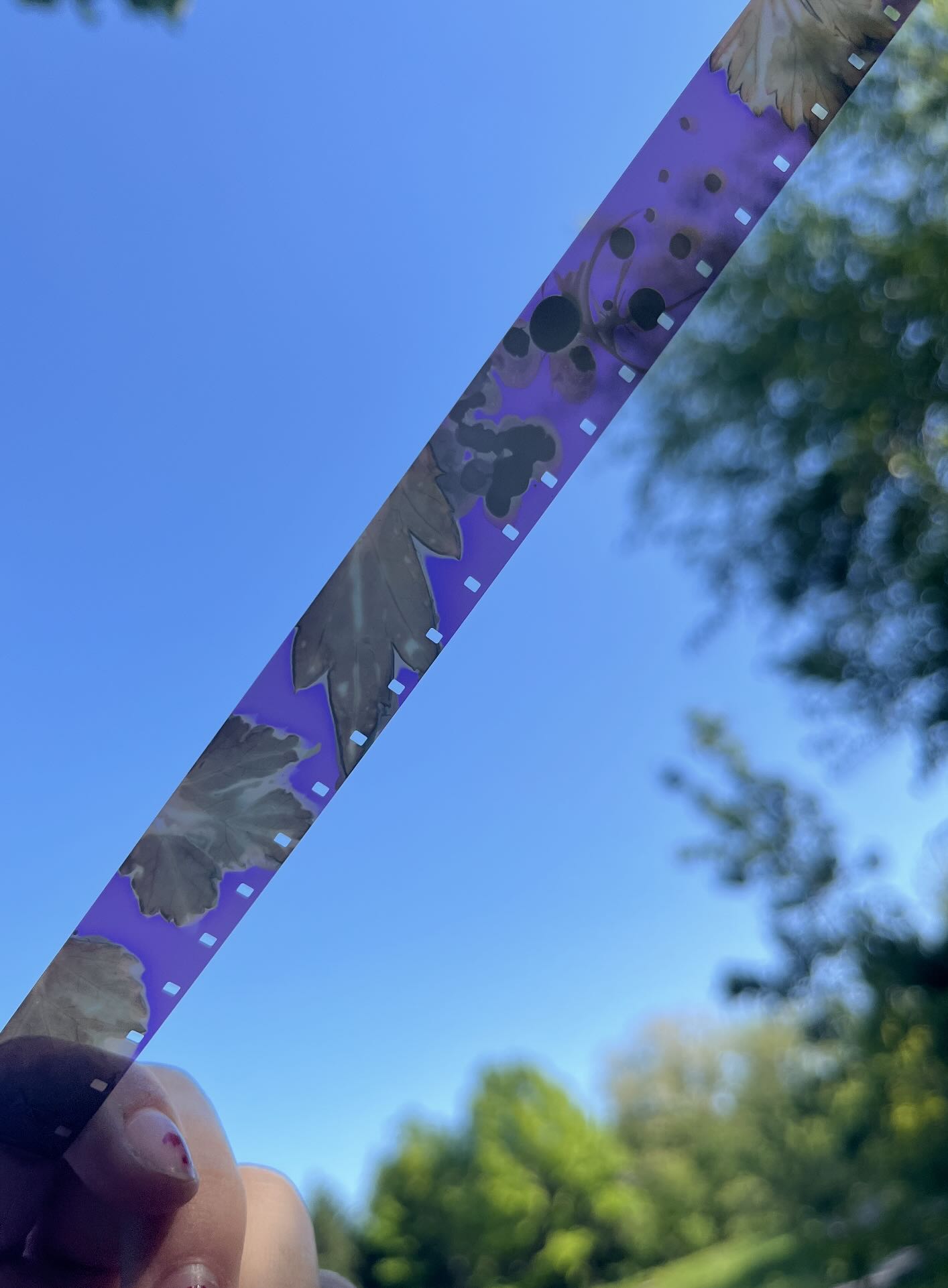
Then we made images. Working with 16mm film strips, eco-developing solutions brewed from the mugwort we had just harvested, and the park's outdoor light as our darkroom, each participant created their own phytograms. We dried the films on tree branches in the wind. The images that resulted belong to the plant as much as to any of us.
The workshop was grounded in a conviction I have developed through this research: that the encounter with mugwort — physical, chemical, sensory — produces a different kind of knowing than reading about it. To hold the plant, to smell it, to let its chemistry mark a surface, is to enter into the entanglement that Anna Tsing describes: not mastery, but attentiveness. Not knowing about, but knowing with.