An Entangled Conversation with Others: Literature Review
This project did not arrive in a vacuum. A growing constellation of artists and scholars have been working at the intersection of botany, colonialism, and migration, each approaching the terrain from a different angle. Together, they constitute a field of thinking that I am both in dialogue with and attempting to extend.
An Entangled Conversation with Others: Literature Review
Maria Thereza Alves, Seeds of Change: Botany of Colonization (1999–ongoing)
Alves's long-durational project traces ballast flora — plants that traveled the world hidden in the stones and soil used to stabilize merchant ships — at former port cities across Europe and New York. By locating historical ballast sites, collecting dormant seeds, and cultivating them, she makes visible an alternative history of global trade: one in which ecological change is inseparable from the violence of empire, famine, and forced migration. The seeds she tends have been dormant for centuries; their germination is a kind of testimony.
For this project, Alves is indispensable. She established the critical premise: that plants are not merely passengers in colonial history but its living records. Her work insists that making visible what official histories erase is itself a political act. What I want to take further is the question of medium — Alves works primarily through cultivation and exhibition. I am interested in what happens when the plant itself becomes a photographic agent, a maker of images, not just an object of them.
TJ Shin, The Vegetarian (2022) and related works
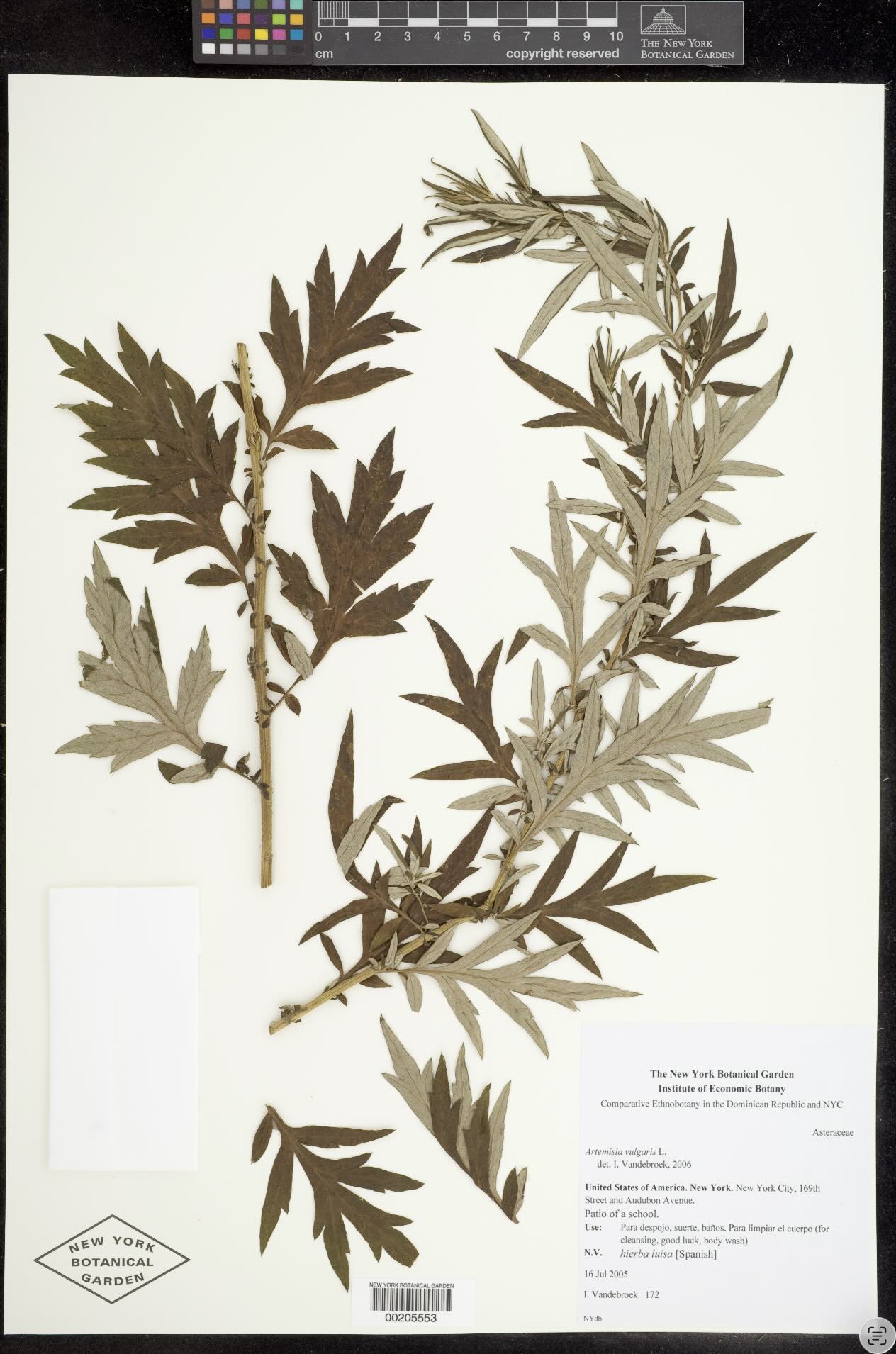
Shin's practice engages mugwort directly, centering on questions of invasion, taxonomy, and racialized bodies. In The Vegetarian, Shin introduced their own DNA into mugwort through transfection, then was instructed by the laboratory to destroy the resulting leaves — a gesture that echoed, in miniature, the long history of colonial science ordering the containment of unruly matter. Shin reads mugwort through the framework of pharmakon — simultaneously cure and poison, healer and pest — and argues that these shifting categories mirror the categorizations imposed on racialized, gendered, and disabled bodies.
Shin's work has been essential to my thinking, particularly in naming the specific dual status mugwort holds: it is labeled invasive in North America while also being foundational to traditional medicine in East and Southeast Asia; it is unwanted and indispensable at once. Where Shin's inquiry stays largely within the gallery and the laboratory, my project moves outward — into the city, into collective practice, into the possibility of a more-than-human archive that is made in public and with others.
Che Yeh, Interstitial Lives (2023)
Che Yeh's community-oriented project in Boston's Chinatown centered on Ailanthus altissima, the tree of heaven — another plant from East Asia, prized in European gardens in the eighteenth century and declared invasive by the twentieth. Yeh proposed these trees as living monuments: witnesses to histories of self-organized resistance, holders of cultural and familial memory, neighbors to the Chinatown residents who had been living alongside them for generations. The project was notably relational — organized through walks, workshops, massages, and collective gathering — proposing cross-species kinship as a practice built in public rather than simply theorized.
Interstitial Lives showed me the political potential of place-based, community-centered plant engagement. Yeh's choice to work with Chinatown specifically — a neighborhood under continuous pressure from real estate development — connects the colonial history of the plant to the ongoing displacement of the community that has made its life beside it. This is a model I have tried to bring to my own New York locations, asking not just what mugwort means abstractly but where it grows, who else is there, and what relationships already exist.
https://cheyeh.com/
Banu Subramaniam, Botany of Empire (2024)
Subramaniam's book is the theoretical backbone of any rigorous engagement with these questions. Drawing on feminist science studies, queer theory, and her own formation as an evolutionary biologist, she demonstrates how botany's foundational practices — naming, taxonomy, the herbarium, the botanical garden — were not neutral scientific endeavors but instruments of colonial extraction and control. Crucially, she critiques the binary of "native" and "invasive" species as itself a colonial fiction, one that maps xenophobic logic onto the plant world and demands new vocabularies in its place. Her call to "rememory the hauntings of colonial biogeography" in order to build more just worlds offers a frame for what this project is ultimately attempting.
For Migration Mapping, Subramaniam provides essential grounding: she makes explicit that the language we use about plants — alien, invasive, naturalized, native — is the same language used to regulate human migration, and that this is not a coincidence but a shared epistemic infrastructure worth dismantling and rebuilding.
Sunny Leerasanthanah, Naturalization (2023)
In this multimedia installation, Leerasanthanah staged a direct confrontation between the discourse of invasive species management and the discourse of immigration enforcement, using satire and role-play to deconstruct the xenophobic logic that underlies both. Actors performed as National Park Service rangers responding to invasive species prompts; the videos made visible how fluidly the language of ecological control slips into the language of border control. Leerasanthanah's own experience as a queer immigrant of color from Thailand informed the work's refusal to keep these registers separate.
Where Leerasanthanah's approach is primarily discursive and institutional — analyzing the language of government documents, news articles, and policy — my project is more materially focused, interested in what the plant itself does and records, and how that materiality can be a form of testimony. But Leerasanthanah's willingness to be explicit about the personal as political is something I carry into this project as well.